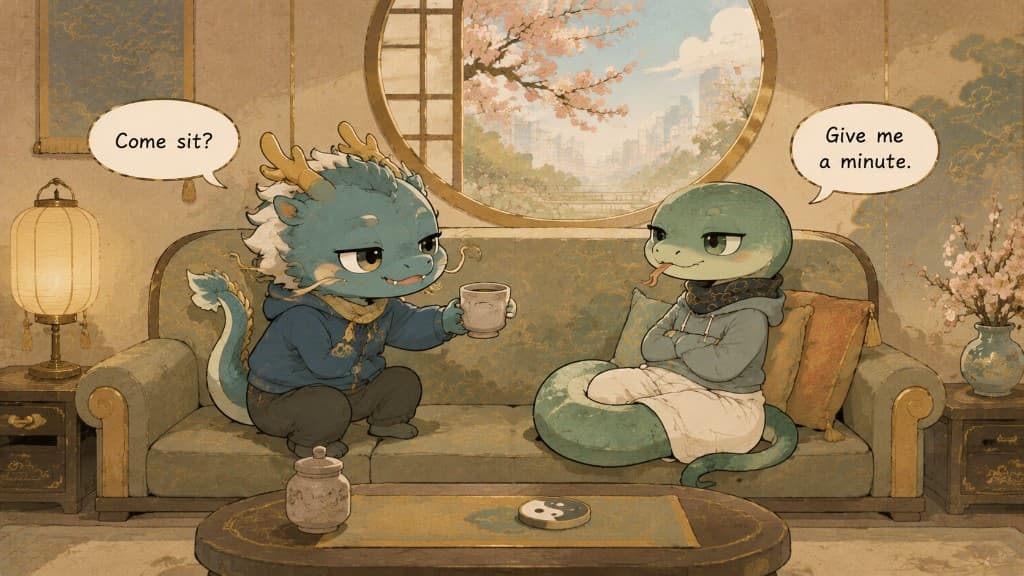
Yin and Yang Aren’t Good vs Evil — They’re Push and Pull
Different rhythms aren’t automatically broken rhythms — in love, work, and everyday life. Yin and yang as push and pull, not good vs evil.
Your relationship might not be broken.
Your work rhythm might not be broken either.
Sometimes one part of life wants movement.
Another part wants space.
One reaches forward.
One pulls inward.
And we often mistake different rhythms for something being wrong.
Different rhythms are not automatically broken rhythms.
In relationships, we see this clearly — one person wants more closeness; the other needs more space. Both start asking: Why don’t they understand me?
But the same pattern shows up everywhere: how we start tasks, how we rest, how we reconnect with friends, how we handle change.
What if this is not a failure?
What if it is a difference in rhythm?
The tattoo version vs the useful version
You’ve seen yin and yang on jewelry, phone cases, and spa logos — a familiar black-and-white swirl.
Many people recognize yin and yang.
Fewer people use it as a way to understand change.
In Chinese philosophy, yin and yang describe complementary forces that exist together — not good versus bad, and not a morality score.
The useful version is quieter.
It’s a language for complementary forces — push and pull, day and night, reach and rest — moving through the same life.
Not a morality score
When two paces collide, modern culture often rushes to a verdict: one person is too much; the other is not enough.
That story feels sharp because it gives someone to blame.
A cleaner frame asks something else:
What if both movements belong?
Reaching forward can be care.
Pulling inward can be another kind of care — protection, processing, recovery.
Different often means two rhythms meeting.
Push-and-pull in real life
At work: one person starts immediately; another needs time to think before they move.
With friends: one calls often; one reconnects quietly after space.
In love: one wants plans and shared air; the other wants a slower room and fewer signals.
Without a pattern language, these moments feel like a trial.
With one, they become information:
You move toward contact like sunrise.
I move toward restoration like evening.
Neither pace cancels the other.
The work is not to erase the difference.
The work is to stop treating difference as proof that someone failed.
Balance isn’t becoming the same
Balance is not a perfect split on the calendar.
Some days need more heat.
Some days need more quiet.
Balance isn’t becoming the same.
It’s learning how different rhythms meet.
That idea — push and pull without a moral winner — is one of the simplest doors into this whole system.
Next episode: finer rhythms
Yin and yang give you a wide lens.
Later, we’ll zoom in on smaller patterns of movement — five rhythms that help describe how people naturally show up.
We call these Five Energies.
You don’t need that full map yet.
For now, keep the shift that matters:
You are not collecting evidence that something is broken.
You are noticing that life — and people — move in complementary rhythms.
Continue exploring:
Meet the Five Energies
Curious about your natural rhythm?
Soft-check your Hidden Energy Type
Continue reading
 Start Here
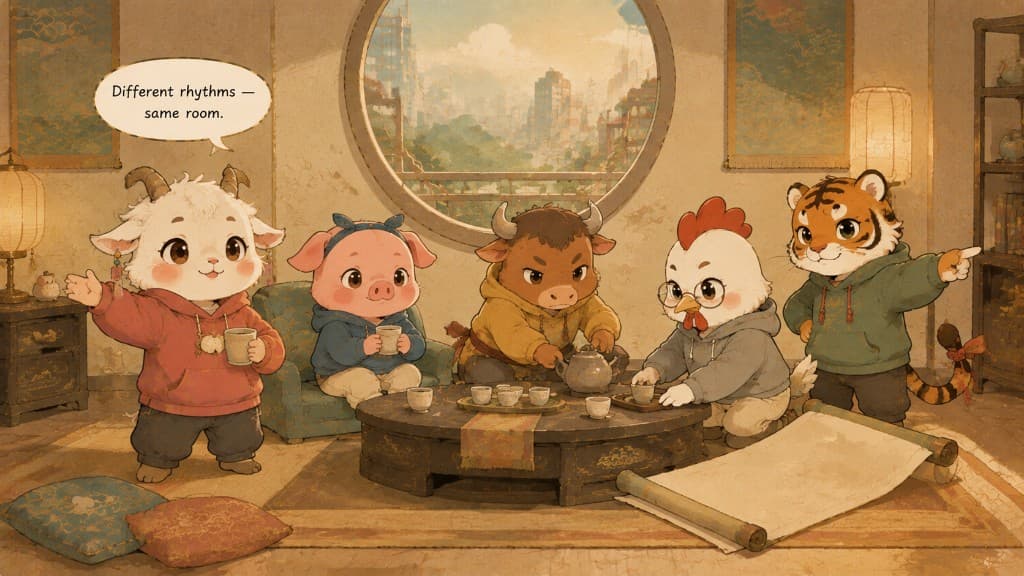
Meet the Five Energies — Fire, Water, Earth, Metal, Wood
Five Energies aren’t personality boxes. They’re a language for rhythms you already feel — Fire, Water, Earth, Metal, Wood — and you’re usually a mix.
 Start Here
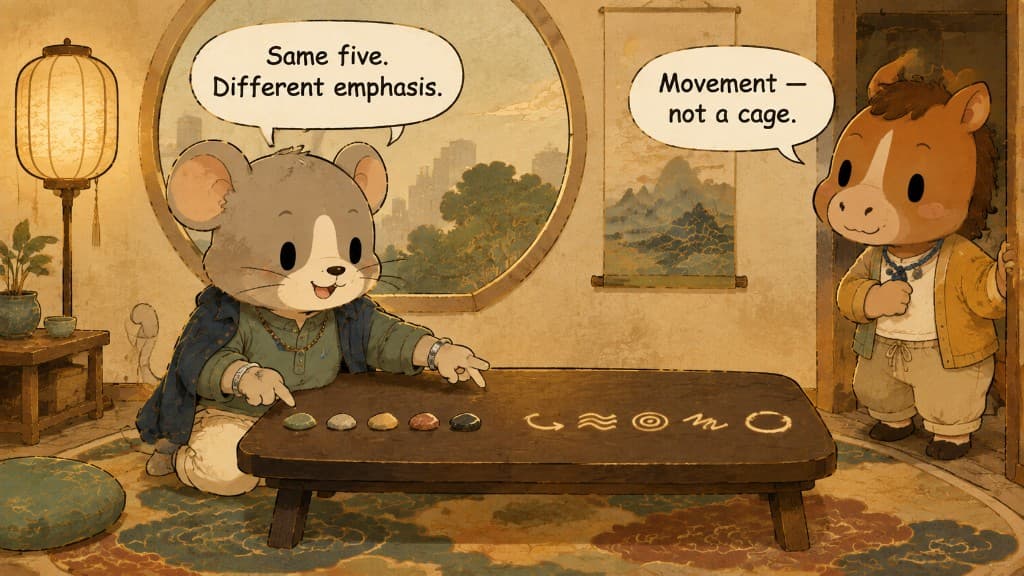
Five Elements vs Five Energies — Same Roots, Modern Language
Wu Xing / Five Elements meet Five Energies: one tradition, a clearer self-reflection vocabulary.
 Start Here
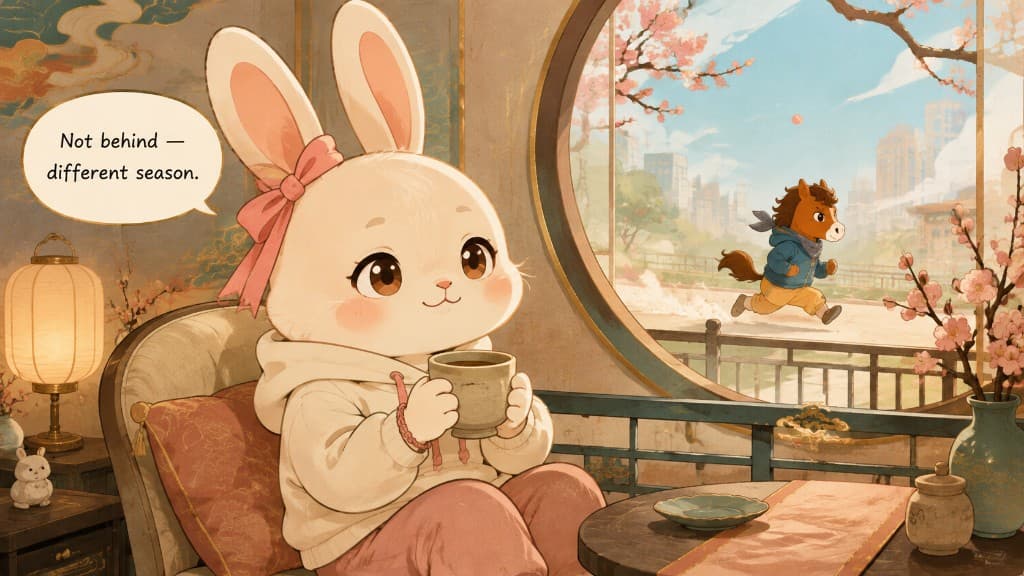
You Are Not Broken — You Might Be in a Different Season
Feeling stuck doesn’t mean you’re broken. You might simply be in a different season — a kinder rhythm frame for modern self-awareness.